


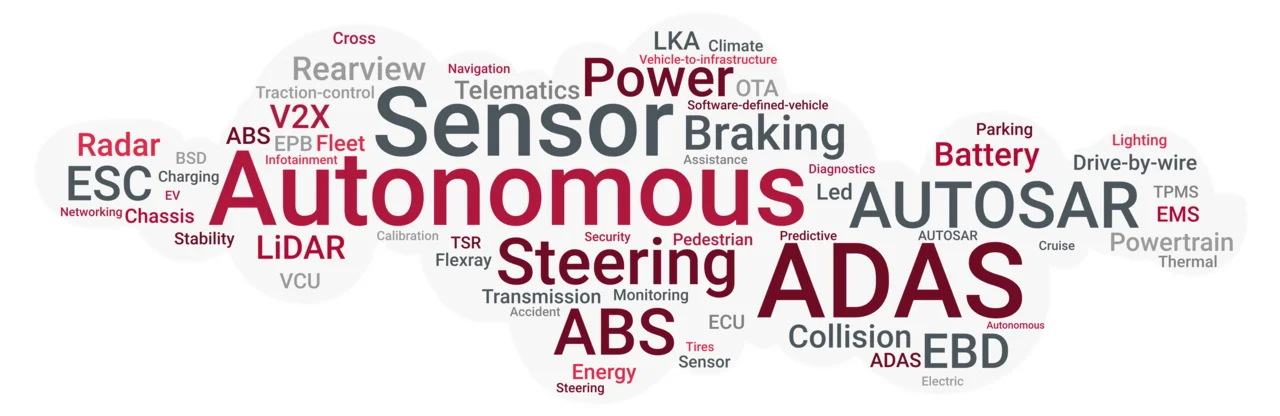
Embedded Software in the Automotive Industry
In recent years, the demand for automotive embedded software has surged, as modern vehicles increasingly depend on software to manage essential functions. From engine management and emissions control to infotainment systems, software now plays a critical role in the performance and safety of vehicles. In fact, the average car today contains more lines of code than even some commercial airplanes, underscoring the importance of reliable, high-quality software in the automotive industry.
As vehicles become more software-driven, the risk of software failure also rises. In the automotive sector, software malfunctions can lead to costly recalls, severe reputational damage, and in worst-case scenarios, the loss of life. This heightened risk has prompted industry leaders to prioritize automotive software quality, particularly in safety-critical systems where failures can have devastating consequences.
Key Standards for Automotive Software Quality
To meet the high safety and reliability demands of modern vehicles, the automotive industry has established specialized software development standards that guide the process of software validation and verification. These standards provide best practices for designing and implementing software, particularly for safety-critical systems.
One of the most widely adopted standards is ISO 26262, which offers a comprehensive framework for ensuring functional safety in road vehicles. ISO 26262 follows a risk-based approach, defining specific requirements for the development of safety-critical automotive software, and has become essential for ensuring compliance with industry safety standards.
In addition, MISRA coding standards play a key role in ensuring the safety and security of software written in C programming, which is extensively used in automotive systems. MISRA provides guidelines for writing robust and reliable software, reducing the risk of software failure in critical automotive applications.
AUTOSAR (AUTomotive Open System ARchitecture) is another prominent standard, designed for the development of embedded software in electronic control units (ECUs). AUTOSAR outlines best practices for software development, testing, and integration, ensuring that embedded systems meet the stringent safety and reliability standards required by the automotive industry.
By adhering to these industry standards, automotive manufacturers and suppliers can ensure their software is of the highest quality, fully compliant with functional safety requirements, and capable of protecting both consumers and the reputations of companies involved in the vehicle production chain.
ISO 26262

Road vehicles – Functional safety
MISRA C/C++

Guidelines for the use of the C/C++ languages in critical systems
AUTOSAR
Guidelines for the C++ language in safety-critical systems.
QA Systems Tools
Static Analysis

QA Misra
Automated coding standards compliance for C/C++ code

Astree
Sound analysis proving absence of runtime errors and data races for C/C++
Need Help?
Whether you’re evaluating tools or have technical questions, please contact us.
Software Testing

Cantana
Automated unit and integration testing for C/C++ code

Cantana Hybrid
Safety standards compliance for GoogleTest suites

Cantana Team Reporting
Test status management dashboard add-on

AdaTest 95
Automated unit and integration testing for Ada code
Our Customers












Whether you’re evaluating tools or have technical questions, please contact us.